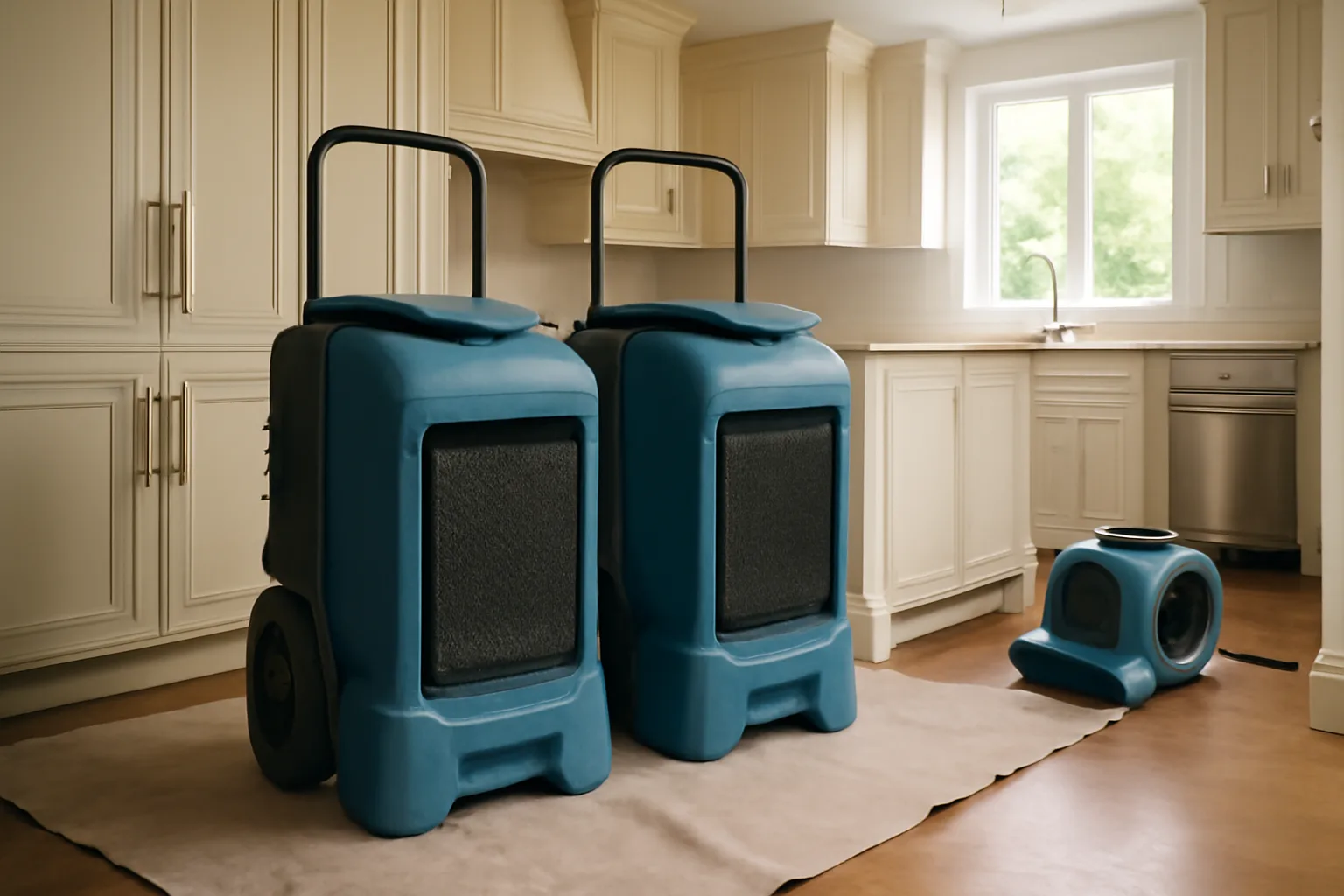
Storm damage in Ewing tends to cascade: the roof fails, the water enters, and the moisture spreads floor by floor. We address both vectors at once — securing the envelope while pulling and drying the water that already got in. Low-lying parts of Mercer County flood first, so a Ewing address near a creek or storm drain gets a faster, water-focused response. Photos of the breach, the tarping, and the interior moisture form a record your adjuster can rely on. Connect with us at 551-231-5461 and a crew seals the opening tonight.
How We Lock Down A Damaged Roof
A single missing shingle becomes a serious interior loss once a storm forces water through the opening. Securing the opening stops the loss from multiplying floor by floor while the interior work begins.
The team braces what the wind compromised, clears storm debris, and dries the interior on documented readings. Wind-driven rain through a damaged envelope is covered by homeowners as storm damage; rising surface water is flood, which needs NFIP coverage.
What To Watch For After The Wind Stops
The first hour after storm damage sets up either a clean claim or a months-long argument. Secure the property if it is safe, photograph the damage widely, file the claim, and call a crew that can dispatch immediately.
Do not sign AOB paperwork from a contractor who shows up unsolicited after a storm; storm-chasers trail major weather for exactly that. Our crew gets there fast, secures the property, and builds the file the adjuster needs without any AOB games.
Why The Entry Point Decides Coverage — Explained
A storm loss often splits into two categories: damage the wind let in, and water that rose from the ground. A power outage that disables a sump pump complicates the picture, so the sequence of events matters as much as the damage.
Our crew photographs the breach, the temporary repairs, and the interior moisture, building the storm file as we work. We frame the loss honestly — wind-driven or flood — because the right framing is what gets the right policy to respond.
A storm loss often splits into two categories: damage the wind let in, and water that rose from the ground. That accuracy is what keeps a storm claim from being second-guessed and the right policy from being denied. We record the storm conditions alongside the damage, so the cause is established and not left open to question. Getting the category right up front is what keeps the correct policy paying without a denial or a delay.
Why We Move On The Breach Immediately — A Straight Answer
The damage from a storm is rarely done when the wind stops — the open breach keeps the loss growing on its own. Every additional hour of exposure spreads the water further into the structure and enlarges the eventual rebuild.
We board windows and doors, tarp the roof, and brace what is unstable, all before the interior dry-out starts. A breach closed quickly keeps the storm claim contained instead of letting it grow with every passing hour.
Until the building envelope is sealed, every hour of weather adds to the loss, so stabilization comes before any drying. Sealing the envelope fast is the cheapest part of a storm response and the part that prevents the largest bills. We seal the breach first with emergency tarp or board-up, then trace the moisture path and dry what already entered. Leaving a property open because "the crew comes tomorrow" is how a contained loss becomes a whole-house gut job.
The First Decisions That Count — What To Know
A few right moves in the first hour are worth more to a storm claim than anything that happens later. Capture the damage, stabilize the opening, and contact your insurer — in that order — before any rebuild work starts.
Throwing out damaged contents before they are documented and signing over your claim are the two costliest early errors. The same crew that tarps the roof builds the documentation, so nothing about the storm claim gets lost between trades.
A few right moves in the first hour are worth more to a storm claim than anything that happens later. Our crew gets there fast, secures the property, and builds the file the adjuster needs — without any AOB games. A contractor who shows up at your door uninvited after a storm is a reason to slow down, not to sign anything. Record the loss, cover the breach, and start the claim before a contractor touches anything permanent.
A single contract for the work
A loss at a {city} address rarely sticks to a single category — storm damage restoration often overlaps with burst pipe response, post-fire restoration, mold cleanup, Category-3 water cleanup, structural rebuild, and we handle the overlap so you do not juggle trades. The same crew and protocols reach and everywhere else across Mercer County.
If you searched for local emergency restoration, Either way, you reach a live dispatcher, not a queue, and you are already ahead of the damage. Call 551-231-5461 any hour, read Stopping Mold Before It Starts in a Ewing Home on our blog, or head back to our Ewing home page to see everything we do.